
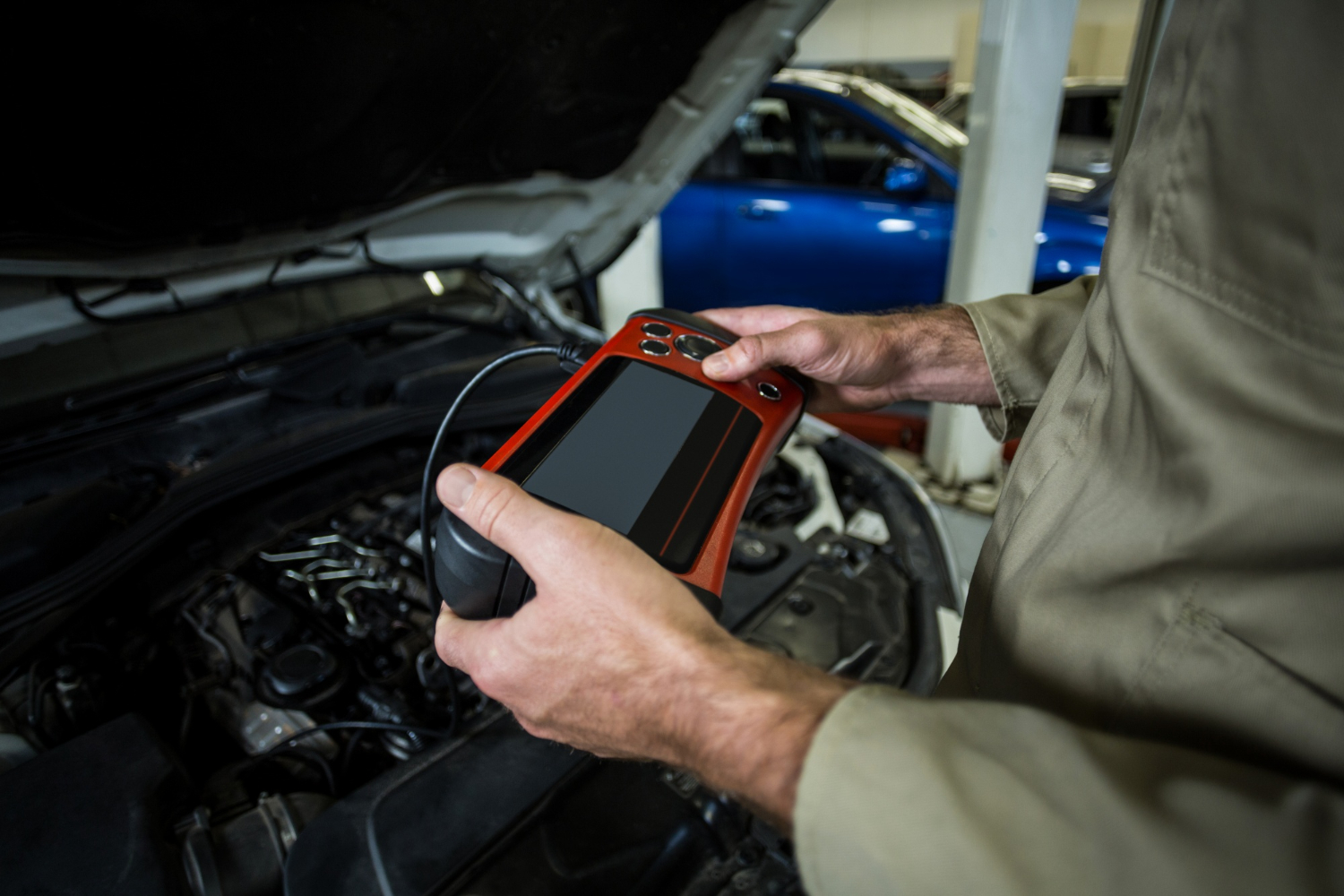
What Do Auto Diagnostic Fees Cover
A free code read at the parts store and a paid diagnostic at a shop are not the same service, even though they can feel like they should be. That mix-up is behind most of the “why is this $150” frustration people bring to the counter.
It hasn’t gone away as of 2026, even with more DIY scan tools on the market than ever.
Pulling a code takes two minutes and a scanner. Diagnosing what’s actually wrong takes a technician’s time working through what that code doesn’t tell you.
A real diagnostic runs $80 to $180 for most jobs, and $120 to $300 when the problem is a tough drivability issue or something electrical that doesn’t throw an obvious pattern. The fee pays for the difference between a guess and an answer.
What’s Actually in a Diagnostic Hour
A code points at a system, not a part. That’s step one to understand, and it’s the whole reason a $20 code reader and a paid diagnostic land in two different categories.
A tech starts with code analysis, reading what the code is actually flagging and cross-referencing it against known patterns for that engine and mileage range. A code that means one thing on a high-mileage Honda Civic can point somewhere else entirely on a turbocharged truck.
Then comes live data, watching real-time sensor readings while the engine runs instead of guessing from a stored number. Fuel trims, oxygen sensor voltage, coolant temp, and airflow readings get pulled up side by side and compared against what’s normal for that engine.
Freeze frame data gets pulled next, the conditions the vehicle was in the moment the code set: engine load, temperature, speed, fuel trims. That narrows down when and why the fault happened, not just that it did.
A code that only sets at highway speed under load points somewhere different than one that sets every cold morning at idle.
From there it’s scope and multimeter work, testing wiring, sensors, and components directly to prove which one is actually failing. A sensor can read fine on a basic test and still fail under a scope, which is why some drivability issues take longer to pin down than others.
Running through all of it is process of elimination, ruling out the likely suspects one at a time until only one explanation is left standing. Most diagnostic jobs run 45 minutes to an hour depending on how many of those steps it takes to isolate the fault.
None of that gets itemized on the invoice as its own line. The thinking time between each step, deciding what to test next based on what the last test showed, is most of what the fee actually covers.
Most of the equipment behind it, a factory-level scan tool, an oscilloscope, and a graphing multimeter, costs more than a handful of diagnostic fees bring in. That’s part of why the rate isn’t negotiable down to what a parts store charges for a free scan.
It’s the same reason two techs can spend different amounts of time on the identical code and both land on the right answer.
Why Guessing Costs More Than Diagnosing
Take a P0420 code, catalytic converter efficiency below threshold. That single code can mean five different things: the catalytic converter itself, a failing upstream oxygen sensor, a failing downstream oxygen sensor, an exhaust leak upstream of the sensor, or an upstream misfire dumping unburned fuel into the exhaust.
Swap the cat first because the code says “catalytic converter,” and you’re out $1,200 if that wasn’t the problem. A Bosch or Denso oxygen sensor runs closer to $200.
If the sensor was actually the problem, the diagnostic hour just saved a thousand dollars in wrong parts. That gap is the whole argument for testing first, especially on a job with a four-figure part attached to the wrong guess.
The same P0420 shows up constantly on Toyota Camrys and Ford F-150s alike, and the testing sequence doesn’t change based on the badge on the hood. A shop checks the sensor and the exhaust before ever quoting a converter, because converters are expensive enough that guessing wrong is a bad bet for everybody.
That’s the math behind the fee. A shop that tests before replacing is protecting the customer’s money as much as its own reputation.
Most shops credit the diagnostic fee toward the repair if you have them do the work, so it’s rarely money spent twice.
Free code reading still has a place. It’s a fine first step to see what’s stored before deciding whether to dig further.
Just don’t expect it to tell you what’s actually broken. That part takes the hour.
FAQ
Why does a shop charge for diagnostics when the parts store reads codes for free?
The free read pulls a code. A paid diagnostic figures out what that code actually means using live data, freeze frame info, and hands-on testing, which the free scan doesn’t include.
Is the diagnostic fee applied to the repair cost?
At most shops, yes. If you have them do the recommended repair, the diagnostic fee is usually credited toward the total.
Can a code reading tell me exactly what part is broken?
No. A code points at a system or circuit, not a specific failed part. Multiple different failures can trigger the same code.
Why is a drivability diagnostic more expensive than a basic one?
Intermittent or electrical problems take longer to reproduce and isolate, sometimes requiring a test drive with data logging equipment attached, which is why those run $120 to $300 instead of the typical $80 to $180.