
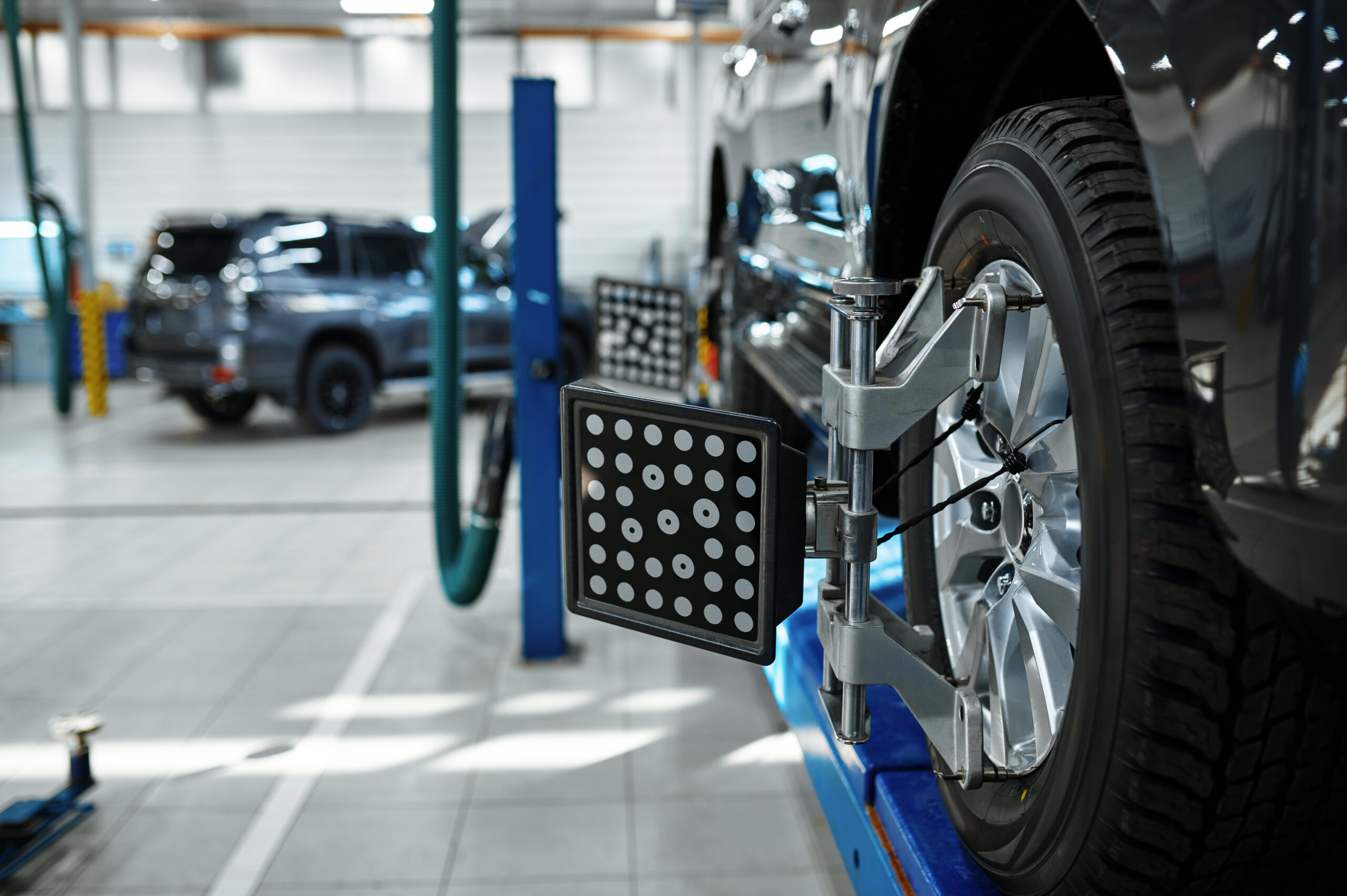
“Do I really need an alignment, or are you trying to sell me one?” That’s a fair question. Most drivers ask it. Most shops don’t give a straight answer.
The honest version: an alignment is worth doing when one of four things is true. The car pulls, the tires are wearing uneven, suspension work just got done, or you smacked something solid like a curb or a deep pothole. Outside those four triggers, it’s usually not necessary. As of 2026, a two-wheel alignment runs $80 to $150 and a four-wheel runs $150 to $200, so it’s not a small charge to throw on a ticket “just to be safe.”
Here’s how to tell which trigger you’ve actually got.
Price, Quick
Two-wheel alignments cover the front axle only. Older trucks and some solid-rear-axle vehicles need this one, and it lands at $80 to $150. Four-wheel alignments hit all four corners and apply to most cars and crossovers built in the last twenty years. That’s the $150 to $200 range.
The “free alignment with new tires” deal is real at a lot of tire chains, but read the fine print. Sometimes it’s a one-time alignment at install. Sometimes it’s a lifetime warranty that requires you to bring the car back every 6,000 miles for a check. The lifetime version can be worth the upcharge on tires. The one-time version is usually a wash.
Steering Pull
If the car drifts to one side on a flat, straight road with your hands light on the wheel, that’s a pull. Real pulls are consistent. Crown in the road can fake one, so test on a road that’s actually flat, both directions.
Confirm by swapping the front tires side to side. If the pull moves with the tires, it’s a tire issue, not alignment. If the pull stays the same direction after the swap, that’s alignment, or it’s a stuck brake caliper. Worth doing standalone. Driving on a misaligned car eats the outside or inside edge of a tire fast, and tires are way more expensive than alignments.
Uneven Tire Wear
Look at the front tires. Run your hand across the tread from the inside edge to the outside edge. If one edge is noticeably more worn, or the inside edge is feathered while the outside still has tread, the alignment is off. Cupping or scalloped wear is usually a worn shock or strut, not alignment, though the two often show up together.
A Honda CR-V or Toyota RAV4 with 60,000 miles of pothole season and no alignment will start chewing the inner edges of the front tires. Caught early, it’s a $150 fix. Caught late, you’re buying tires too. Standalone alignment is worth it the moment edge wear shows up.
After Suspension Work
Anytime a control arm, tie rod end, ball joint, or strut gets swapped, the alignment is off. Has to be. The geometry changed. Even Moog or Mevotech parts installed perfectly will shift toe and camber off spec. A new set of tie rods without an alignment after is throwing money away.
This trigger doesn’t need confirmation. If suspension work happened, alignment is part of the job. Most shops bundle it. If a shop quotes tie rods without an alignment line item, that’s a flag.
After a Curb Hit or Big Pothole
Smacking a curb at parking-lot speed or hitting a winter pothole at 45 mph can knock toe out of spec in one shot. Sometimes it bends a tie rod. Sometimes it just shifts the adjustment. The car may not pull right away, but the tires will start wearing wrong within a few thousand miles.
Confirm by looking at the steering wheel. If it sits crooked when you’re driving straight, alignment got knocked out. Worth doing soon, not next year.
What an Alignment Actually Does
Three angles get set. Toe is whether the tires point straight ahead or angle in or out, like pigeon-toed or duck-footed. Camber is whether the tire leans in or out at the top when viewed from the front. Caster is the tilt of the steering axis, which controls how the wheel returns to center after a turn. Toe is the one that goes out of spec most often and chews tires the fastest.
The Free-With-Tires Question
If a tire shop offers free alignment with a set of tires, take it, but verify they actually performed it. Ask for the printout. Every modern alignment rack spits out a before-and-after sheet showing the angles in green or red. No printout, no alignment. Some shops “include” it and skip the actual work because nobody asks for proof.
Tires last twice as long on a car that’s set up right. That math wins every time.
Usually two to three years on a car that doesn’t hit potholes hard and hasn’t had suspension work done. Once a tie rod or control arm gets swapped, the clock resets and a new alignment is needed.
No. Vibration is almost always tire balance or a bent wheel, not alignment. Alignment fixes pulling and tire wear. Different problem, different fix.
Not the angles, but the symptoms yes. Park on a flat lot, get out, and eyeball the front tires from the front. Check the inside and outside edges for uneven wear. Watch the steering wheel position when driving straight. Those tell most of the story.
About 45 minutes to an hour on a normal car. Longer if the bolts are seized from rust or the adjustment is fighting back. Trucks and older vehicles sometimes run 90 minutes.
A little. A car with bad toe is dragging the tires sideways every mile, which adds rolling resistance. Most drivers see a small bump in mpg after an alignment, but it’s not the main reason to do one. Tire life is.